Weekly Roundup Dec. 29-Jan. 2
ECONOMY UPDATES | OIL POLITICAL ENVIRONMENT | 2025 WRAP UP
By: Lorenzo Alfonso
Jan. 4, 2026
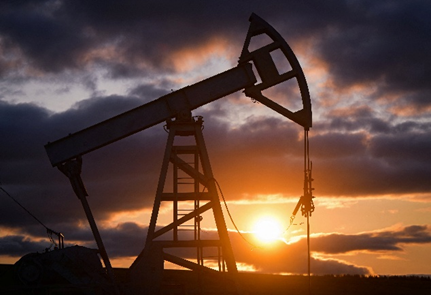
Market Snapshot
S&P500: -.61% | Russel 2000: -.39% | Dow Jones: .16% | Oil (WTI): -3.01% | Gold (GLD): -1.33% | VIX: .48% | 10 yr Treasury Yield: 4.191%
The Economy Glance
The United States has been busy with the start of 2026. On Tuesday, the Federal Reserve Committee released the meeting minutes from it’s December 9–10 policy meeting. The notes revealed “mixed feelings” among officials regarding future interest-rate cuts. While the Fed did cut rates by 25 basis points, bringing the benchmark range to 3.5%–3.75%, there was notable dissent, with some members favoring a pause due to sticky inflation. Currently, markets are pricing in a low probability, roughly 15%, of another cut in January, with most analysts expecting a hold.
Jobless claims fell for a third straight week, with claims for the week ending December 27 totaling 199,000. Continuing unemployment claims also decreased. These indicators are what previously made investors fearful, but they are now moving in the right direction.
Political Environment
On Friday at 10:46 a.m. ET, President Trump gave the order for the capture of Venezuelan President Nicolás Maduro after several months of CIA surveillance. There were several warnings for the leader to step down from his role, but he refused.
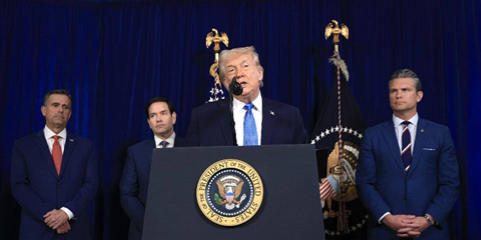
“Operation Absolute Resolve” moved forward, and Delta Force took the leader and his spouse into custody. President Trump stated that the United States will “run” the country until it is back on its feet. What is the backstory? Venezuela is sitting on the largest oil reserve in the world.
Analysts see two main scenarios:
If conflict continues in Venezuela or sanctions are imposed, diesel markets could tighten and add upward pressure to prices and inflation.
If the U.S. supports the country and helps stabilize production, output may rise by a few hundred thousand barrels per day over several years. However, major banks project only a small downward shift in oil prices, specifically WTI. This is because the majority of global oil supply comes from OPEC+, U.S. shale, and Asian markets. It will take decades and significant investment to see a meaningful impact, depending on the future relationship with Venezuela. Oil companies potentially in line for investment include Conoco, Exxon, and Chevron.
2025 Year Roundup
As 2025 draws to a close, the S&P 500 and Dow slipped from record highs. In 2025, equities across the U.S., Europe, India, and Japan finished near all-time highs.
AI investments were the central driver of returns, with the Magnificent Seven extending their dominance of the U.S. market. These seven companies contributed 42% of the S&P 500’s total return in 2025 and 55% over the most recent three-year period, according to S&P Dow Jones Indices. Their share of the index’s total market capitalization rose to 34.9% at the end of 2025, up from 33.5% at the end of 2024.
President Trump’s 2025 tariff policy caused increased volatility in April, but markets rebounded throughout the year as rate cuts and signs of a resilient economy supported sentiment.
Gold and silver rallied during the year, with silver surpassing $80 an ounce for the first time. Industrial demand, supply constraints, and momentum trading all contributed to precious metals outperforming many traditional risk assets by year-end.
Looking ahead
As major banks are preparing to open the quarterly earnings season, analysts predict that S&P 500 companies will post an 8.3% increase in earnings per share for the fourth quarter. This is a positive signal as we move further into 2026.
January market performance is often viewed as an indicator of what may be in store for the rest of the year. About 72% of the time since 1929, the index has posted a positive return for the year following gains in January, or losses depending on how the year begins.
Labor market data due on Friday will show whether recent weakness concerns extended into December.
Happy New Year and have an amazing 2026.
Glossary
Basis Points (bps): Think of these as "financial pennies." In the world of interest rates, 1% is a huge move, so experts break it down into 100 pieces.
100 basis points = 1.00%
25 basis points = 0.25%
OPEC & OPEC+: OPEC is basically a "club" of countries (like Saudi Arabia and Kuwait) that own a lot of the world's oil. They meet to decide how much oil to pump.
OPEC+ is the same club plus a few "friends" like Russia.
Why they matter: If they decide to produce less oil, the price of gas at your local station usually goes up because there is less to go around.
WTI (West Texas Intermediate): This is just a specific "brand" or grade of oil produced in the U.S. (mostly Texas). When you hear news anchors say "the price of oil is $70," they are usually talking about the price of one barrel of WTI.
S&P 500 & Dow Jones
S&P 500: A "basket" of 500 of the biggest companies in the U.S. (like Apple, Amazon, and Starbucks). It is used as a scoreboard for how the whole U.S. economy is doing.
Dow Jones (The Dow): A smaller "basket" of only 30 massive, old-school companies.
The "Magnificent Seven": This is a nickname for the seven tech giants that currently drive the stock market: Apple, Microsoft, Alphabet (Google), Amazon, Nvidia, Meta (Facebook), and Tesla. Because they are so huge, if these seven stocks go down, they can pull the entire market down with them.
EPS (Earnings Per Share): This is a company’s "report card" grade. It’s the total profit a company made, divided by the number of stock slices (shares) it has.
High EPS: The company is making a lot of money for its owners.
Low EPS: The company might be struggling or spending too much.
Non-Farm Payrolls (NFP): A fancy name for a report released on the first Friday of every month that tells us how many new jobs were created in the U.S. (It excludes farm workers because that work is seasonal).
