Business Models, Financing & Sustainability in AI-Powered Data Centers
A Strategic Outlook
By: Sophie Nannemann
Feb. 16, 2026
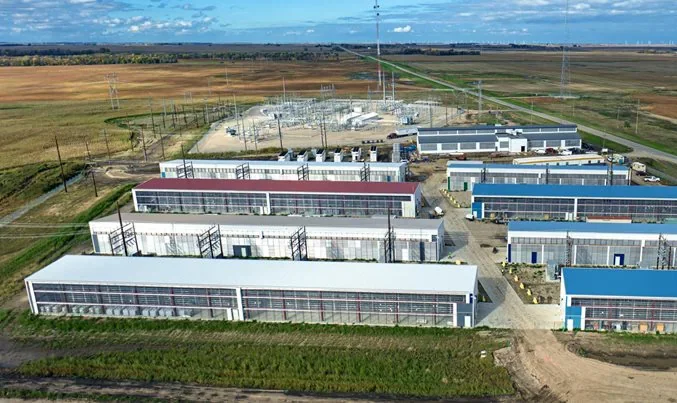
Artificial intelligence infrastructure has entered a phase where energy strategy, capital structure, and sustainability performance are no longer peripheral concerns, they are the core determinants of competitive advantage. Across this series, one theme has emerged repeatedly: compute may be abundant, but megawatts are scarce. The companies that align energy procurement, infrastructure design, and financing strategy most effectively will define the next generation of AI winners. This final article steps back to examine how business models, investment flows, sustainability expectations, and emerging technologies are converging into a new operating framework for AI-powered data centers.
The Urgency: Explosive Demand Meets Physical Constraints
The growth trajectory of AI infrastructure is unprecedented. Global data-center electricity consumption could increase more than 160% by 2030, driven overwhelmingly by generative AI training and inference workloads.
This demand surge is colliding with power systems not designed for sudden multi-gigawatt industrial loads. Transmission bottlenecks, permitting delays, and insufficient reserve margins are already slowing or reshaping deployment timelines.
This shift has profound implications. Historically, firms gained a competitive edge in AI primarily through superior access to high-performance chips and skilled engineering talent. Today, access to reliable and affordable power increasingly plays that role. Power procurement strategy is now inseparable from infrastructure strategy, influencing everything from facility location to long-term operating margins and valuation.
At the same time, sustainability pressures are intensifying. Institutional investors, regulators, and enterprise customers are scrutinizing carbon intensity, energy sourcing, and water use. Renewable integration and efficiency improvements are no longer just environmental gestures; they are prerequisites for capital access and market credibility.
The result is a structural shift: AI infrastructure is evolving from a purely digital asset into a hybrid technology-energy asset.
New Business Models: Vertical Integration, Partnerships, and Shared Infrastructure
In response to power constraints and capital intensity, several new infrastructure business models are emerging.
Hyperscaler Vertical Integration:
Major cloud providers, including Amazon, Microsoft, and Google, are increasingly building their own mega-scale data centers directly adjacent to renewable generation or secured grid capacity. This vertical integration allows hyperscalers to control both compute and energy supply, insulating themselves from grid volatility and transmission bottlenecks.
These companies are anchoring gigawatt-scale renewable projects through long-term power purchase agreements (PPAs), effectively acting as both technology operators and energy buyers.
Over time, this model transforms energy from an operational expense into a strategic asset.
Vertical integration also improves cost predictability. Locking in electricity pricing through renewable contracts stabilizes operating margins and reduces exposure to fossil-fuel price volatility, strengthening long-term financial resilience.
Utility and Renewable Developer Partnerships:
Not all operators can vertically integrate at hyperscaler scale. Many data-center developers are instead forming partnerships with utilities, independent power producers, and renewable developers. These partnerships allow data-center operators to co-develop renewable projects or secure dedicated generation capacity.
This model offers several advantages:
Faster deployment timelines by aligning infrastructure planning with generation build-out
Reduced grid congestion risk through co-located or dedicated power supply
Improved financing terms due to predictable long-term energy costs
Utilities, in turn, gain stable long-term customers for large-scale generation projects, aligning incentives across the energy and compute ecosystems.
Shared Infrastructure and Co-Location Models:
A third model is emerging around shared infrastructure. Instead of owning entire facilities, companies increasingly co-locate workloads in data centers strategically located near renewable energy hubs or behind-the-meter generation.
Behind-the-meter arrangements allow power to flow directly from renewable sources to data centers without passing through public transmission systems, reducing congestion risk and accelerating deployment.
This shared infrastructure approach lowers capital requirements while allowing operators to access renewable power and high-efficiency facilities. It also enables incremental scaling, reducing the risk of overbuilding capacity ahead of demand.
Together, these models reflect a fundamental shift: power procurement and infrastructure deployment are converging into a single strategic decision.
Financing the AI Infrastructure Boom: Aligning Capital, Energy, and Technology
AI data centers are among the most capital-intensive assets in the modern economy. Financing these facilities requires integrating computing power infrastructure, renewable generation, and grid interconnection into cohesive investment frameworks.
Power Purchase Agreements and Renewable Financing:
Power purchase agreements (PPAs) have become a cornerstone financing mechanism. These long-term contracts allow operators to secure renewable energy at fixed prices for 10–25 years, stabilizing operating costs and enabling renewable developers to secure project financing.
Beyond PPAs, operators are increasingly leveraging green bonds, infrastructure funds, and hybrid financing structures that combine technology investment with energy project financing. These instruments align investor incentives with sustainability and long-term infrastructure performance.
Capital Market Dynamics and Investor Considerations:
For investors, AI data-center infrastructure offers both opportunity and risk.
Key investment risks include:
Permitting delays for generation and transmission infrastructure
Grid congestion limiting available power delivery
Power price volatility affecting operating margins
Technological breakthroughs that reduce processing energy intensity
These risks directly influence valuation and financing terms. Investors increasingly evaluate infrastructure efficiency, power security, and sustainability performance alongside traditional financial metrics.
Power procurement strategy is becoming a key determinant of IPO readiness. Companies unable to demonstrate scalable, affordable energy access may face limited public-market appetite, regardless of their technological capabilities.
Energy strategy is now financial strategy.
Sustainability and ESG: From Reporting Obligation to Strategic Imperative
As AI infrastructure expands, sustainability performance is becoming central to regulatory compliance, investor evaluation, and corporate reputation.
Key ESG dimensions include:
Carbon Footprint and Renewable Energy Usage:
Operators are increasingly required to disclose carbon intensity metrics and renewable energy sourcing. Facilities powered by renewables benefit from lower emissions intensity and improved ESG ratings, strengthening investor confidence and public perception.
Water Use and Cooling Efficiency:
Advanced cooling technologies, including liquid and immersion cooling, improve efficiency but may introduce new water management considerations. Water usage effectiveness is becoming an important metric for sustainability reporting and community impact evaluation.
Community and Grid Impact:
Large data centers affect local communities through land use, grid load, and infrastructure requirements. Responsible development practices, including renewable integration and grid support, are increasingly important for regulatory approval and stakeholder trust.
Sustainability performance is no longer merely reputational, it directly influences financing costs, regulatory approvals, and long-term valuation.
Future Outlook: Technology, Geopolitics, and Policy
Several emerging trends will shape the long-term trajectory of AI infrastructure.
Emerging Technologies: Nuclear, Storage, and Efficient Hardware:
New technologies may dramatically reshape the energy economics of AI data centers:
Small modular nuclear reactors could provide reliable, carbon-free baseload power
Advanced battery storage will improve renewable reliability and reduce grid dependence
Neuromorphic and energy-efficient hardware architectures may significantly reduce energy per inference
Efficiency improvements in cooling, architecture, and workload scheduling already demonstrate how infrastructure innovation can reduce energy demand and improve scalability.
These technologies will determine whether AI energy consumption continues to rise exponentially or stabilizes through efficiency gains.
Geopolitics: Data Centers as Strategic Infrastructure:
AI infrastructure is increasingly viewed as a strategic national asset. Governments are investing heavily in domestic data-center capacity to secure technological sovereignty and economic competitiveness.
This geopolitical dimension will influence investment flows, regulatory frameworks, and global infrastructure deployment patterns.
Policy and Regulatory Evolution:
Public policy will play a critical role in enabling sustainable AI growth.
Key policy trends include:
Renewable energy incentives
Grid modernization and transmission expansion
Carbon pricing mechanisms
Infrastructure permitting reforms
Regions that align policy, energy infrastructure, and investment incentives most effectively will emerge as global AI infrastructure leaders.
Strategic Implications for Stakeholders
The convergence of AI, energy, and capital presents clear strategic imperatives for stakeholders across the ecosystem.
For Companies:
AI firms must treat energy procurement and infrastructure efficiency as core strategic priorities. Vertical integration, renewable partnerships, and efficient facility design will determine long-term scalability and profitability.
For Investors:
Infrastructure resilience, renewable integration, and efficiency performance should be evaluated alongside traditional financial metrics. Energy security and sustainability will increasingly determine valuation and investment risk.
For Policymakers:
Grid modernization, renewable deployment, and regulatory reform are essential to supporting AI-driven economic growth while maintaining sustainability goals.
For Sustainability Professionals:
Transparent reporting, efficient infrastructure design, and responsible resource management are critical to ensuring AI expansion aligns with environmental and societal priorities.
Conclusion: The Emergence of the Megawatt-Driven AI Economy
The defining constraint of the AI era is no longer computational capability; it is energy availability. Power access, infrastructure efficiency, and financing alignment will determine which companies scale successfully and which fall behind.
Renewables, advanced cooling, and innovative financing models are transforming AI data centers from passive energy consumers into strategically managed energy assets. Companies that integrate energy strategy into their core operating model will achieve sustainable growth, predictable margins, and investor confidence.
The AI infrastructure race is not simply a race for faster chips or better models. It is a race to secure, to finance, and to efficiently deploy megawatts.
In this new paradigm, the winners will not just build smarter machines. They will build smarter energy systems to power them.
