Weekly Roundup Feb. 16-20
TARRIFS STRIKED DOWN | IRAN CONFLICT | ECONOMY REPORTS
By: Lorenzo Alfonso and Hollis Costa
Feb. 23, 2026
Market Snapshot
S&P500: 1.10% | Russel 2000: 0.82% | Dow Jones: 0.19% | Oil (WTI): 17.62% | Gold (GLD): -4.16% | VIX: -12.63% | 10 yr Treasury Yield: 4.085%
The Economy at a Glance
Major stock markets rebounded this past week. The Nasdaq finished 1.5% higher after previously posting five consecutive weekly declines. The S&P 500 gained 1.1%, and the Dow added 0.3%.
The price of U.S. crude oil climbed nearly 6% for the week, rising to its highest level in six months. Tensions involving Iran have increased volatility in oil prices.
Crypto continues to decline, with Bitcoin trading below $68,000.
Homebuilder confidence slipped, dropping one point in February. On a positive note, Census Bureau data released after delays tied to the recent federal government shutdown showed that privately owned housing starts increased 3.9% in November and 6.2% in December, both ahead of consensus estimates.
The 10-year Treasury yield finished the week around 4.08%.
We are heading into a potentially wild week with several major developments in focus.
GDP Slowdown
The latest GDP report showed that the U.S. economy is growing at a slower pace than expected. GDP expanded at an annualized rate of 1.4% in the fourth quarter. Expectations were closer to 2.5%, and this was well below the third quarter’s 4.4% growth rate.
Federal spending declined in the fourth quarter, likely influenced in part by the government shutdown.
Inflation Acceleration
The Federal Reserve’s preferred inflation measure showed prices rising at the fastest pace in nearly a year. Friday’s release of the Personal Consumption Expenditures (PCE) Price Index showed inflation rose at an annual rate of 2.9% in December, the highest since March 2024.
This report came just a week after the Consumer Price Index (CPI) showed inflation easing to 2.4% in January, highlighting mixed signals in inflation trends.
Tariffs Shutdown
In a major ruling on presidential authority, the Supreme Court voted 6–3 on Friday, ruling that certain tariffs exceeded the powers granted to the president by Congress under the 1977 law allowing regulation of commerce during national emergencies created by foreign threats.
Refunds are now expected to be released, with estimates suggesting total repayments in 2025 could exceed $200 billion.
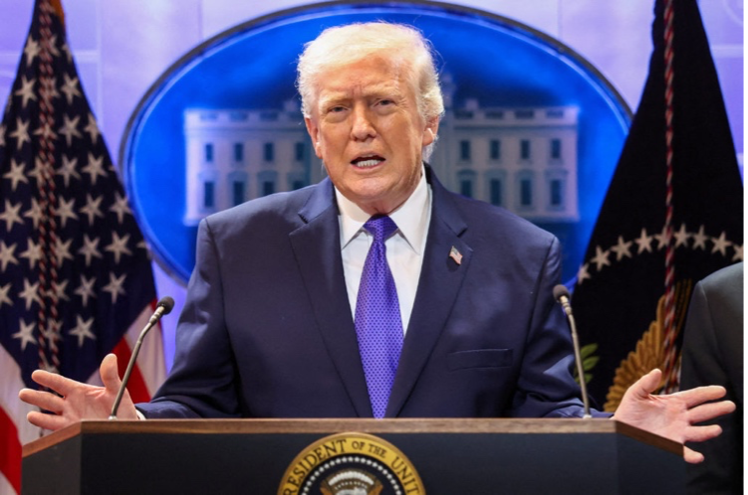
President Donald Trump briefly spoke about the decision and expressed disappointment with certain members of the Supreme Court. Shortly after the ruling removed his primary tool for imposing tariffs, he implemented a 10% tariff under Section 122 of the 1974 Trade Act.

Protesters wave flags near a replica of Jerusalem’s Dome of the Rock at a June 14, 2025 rally in Tehran supporting the government amid Israel’s attacks on Iran.
Iran Conflicts - US Consumer Affected
Tensions have been building in Iran since the beginning of 2026, as the government imposed harsh crackdowns in response to anti-government protests. Iran is also believed to be approaching the technical capability to produce nuclear weapons, though none have been officially confirmed.
President Trump has indicated he may intervene unless Iran agrees to a strict agreement limiting uranium enrichment. He has framed the situation as preventing Iran from developing nuclear capabilities.
Iran produces roughly one-fifth of the world’s oil and ships much of it through the Strait of Hormuz. This gives the country significant leverage in global energy markets. If conflict escalates or shipping routes are disrupted, oil prices would likely rise, directly impacting U.S. consumers through higher gas prices.
Talks of a potential strike on February 17 pushed U.S. oil prices up 6.78%, showing how sensitive markets are to geopolitical risk. Higher oil prices could also increase broader import costs, as energy is a key input in global production.
President Trump has reportedly given Iran roughly two weeks to agree to a nuclear deal before further action could be considered. The U.S. has positioned military forces in the region as a precaution. Even the anticipation of conflict has already moved oil markets; an actual escalation could have significant effects on global energy prices, inflation, and overall economic stability.
Looking Ahead
Next week, markets will closely monitor developments surrounding Iran and any resulting impact on oil prices and investor sentiment. As of Friday, crude remains volatile, while major indexes have held relatively steady.
Factory orders are scheduled for release Monday.
The Producer Price Index (PPI) and construction spending reports are scheduled for release Friday.
Glossary:
GDP (Gross Domestic Product)
This measures the total value of everything the country produces. If GDP is rising quickly, the economy is expanding. If it slows, growth is cooling down.
Annualized Rate
This shows what growth would look like if one quarter’s pace continued for a full year. It helps compare short-term growth to yearly trends.
PCE (Personal Consumption Expenditures)
This is the Federal Reserve’s preferred inflation measure. It tracks how much people are spending and how prices are changing across that spending.
CPI (Consumer Price Index)
Another inflation measure that looks at everyday goods like food, gas, rent, and services. It is often the one you see in headlines.
10-Year Treasury Yield
This is the interest rate the U.S. government pays to borrow money for ten years. Mortgage rates and other loans often move based on this.
Consensus Estimates
These are the average expectations from economists and analysts before a report is released. Markets move based on how actual numbers compare to these expectations.
Strait of Hormuz
A narrow shipping route in the Middle East where a large percentage of the world’s oil passes through. If this area is disrupted, oil prices usually jump quickly.
