How a carve-out became a $9 billion acquisition, and what really drove it
By: Jacob Gaer
10 November, 2026
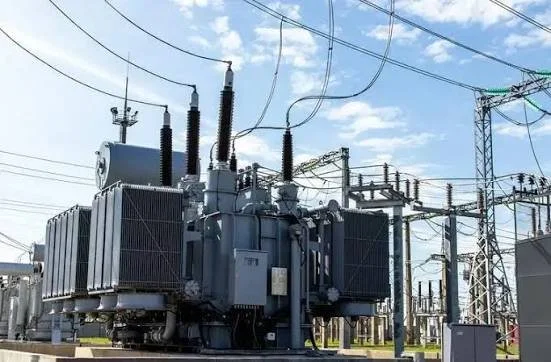
As investment continues to pour into power grid expansion, there is no shortage of big names looking to capitalize on strategic growth opportunities. One notable example came recently on October 28th, when GE Vernova (NYSE: GEV) announced the acquisition of Trench Group. Trench is a global leader in high-voltage equipment, known best for producing bushings and other grid components. GE Vernova agreed to buy the manufacturer from Triton Partners, a private equity firm, for $9.0 billion, making this its largest acquisition since spinning off from GE in 2024. What stands out about this deal is the valuation history of Trench. Triton agreed to acquire Trench from Siemens Energy in 2023 for a reported €500 million, meaning GE Vernova’s price of roughly €8 billion comes in at about 16 times what Triton paid. An increase of this magnitude raises an interesting question: Is this value creation the result of active ownership, or simply a well-timed investment?
It’s important to first understand the circumstances surrounding Triton’s entry into Trench. When Triton agreed to buy the firm in 2023, Siemens Energy was facing severe financial distress driven by quality issues in its wind turbine business. Within weeks of the sale, the company needed financial guarantees from the government just to keep bidding on new projects. Raising cash had become a top priority, and selling Trench was an easy decision. It made up less than 3% of the company’s workforce, and its business fell outside of Siemens Energy’s core focus. Triton came in and reportedly paid less than 1x Trench’s 2023 revenue of €533 million. Triton specializes in carve-outs and had made prior investments in high-voltage equipment, making them a perfect fit for the deal. Trench also locked in a long-term supply agreement with Siemens Energy, allowing Trench to maintain one of its largest customers. Before Triton even took charge operationally, they had already gained an edge by buying from a motivated seller at a price that left significant room for growth.
To understand where value was created in Trench’s 16x, we need to understand how PE firms increase value. Valuations can grow from operational improvements (revenue growth and margin expansion) or from multiple expansion (investors are willing to pay more for each dollar of earnings). After Triton assumed ownership, they were able to grow revenue by 1.7x to €907 million in 2025. During the same period, Trench’s EV/Revenue multiple grew from under 1x to about 9x. This means that multiple expansion is responsible for most of the added value, so why is GE Vernova willing to pay so much for each euro of Trench’s revenue? The answer is that GE Vernova is valuing Trench on what it expects the business to become. The $9.0 billion purchase price comes out to 13x projected 2028 EBITDA, derived from an estimated $1.9 billion in revenue at a 36% margin. GE Vernova is paying up now for the growth and margins it expects Trench to deliver. The question now becomes whether that positioning is the work of Triton’s ownership or simply the market itself.
Looking at operations, there’s no doubt that Triton made significant changes to the business during their ownership. When they took over, Trench had about 2,400 employees and nine factories. By the time Triton agreed to sell, Trench had grown to more than 3,000 employees across 11 factories and completed three bolt-on acquisitions. Triton also expanded Trench’s presence in the U.S. with a new plant in Charlotte, which will be the first in the country to produce 765 kV bushings starting in late 2027. Most importantly, Trench signed long-term agreements with GE Vernova, Hitachi Energy, and Siemens Energy that run well into the 2030s, laying the foundation for future revenues and painting a healthy picture for demand going forward. However, Triton didn’t create that demand; they simply capitalized on it. Grid equipment shortages have been a critical bottleneck in the grid buildout for some time now. Large transformers can take up to five years to procure, and bushings are among the constrained components. This scarcity is a large part of what makes Trench so valuable to GE Vernova specifically. GE Vernova currently buys most of its bushings from outside suppliers, which complicates timelines and decreases control of input costs. Owning Trench secures and stabilizes the supply of a key component, and since customers often choose which brand of bushing goes into their transformers, it also gives GE Vernova the potential to win more transformer orders. While Triton didn’t create the grid boom that’s fueling GE Vernova’s purchase price, they did build a business that was ready to capture the upside of it.
Overall, Trench’s 16x value growth wasn’t purely the result of active ownership or a well-timed investment, but rather a mix. Triton grew revenue 1.7x in 2 years, all while building out the capacity and contracts that made Trench an attractive target. However, it was the higher multiple, and the grid demand timing behind it, that did most of the heavy lifting in turning Trench from a solid business into a $9 billion one. For investors, that multiple holds relevancy beyond just this deal. The multiple Triton captured is the same one being priced into GE Vernova and other grid names, and it’s highly dependent on the grid boom continuing. With GE Vernova paying for Trench based on 2028 figures, and the deal not closing until late 2027, the next two years will be the real test. If Trench keeps growing at the pace GE Vernova expects, the price will look justified. If the grid cycle cools, the high multiples will be the first to fall.