The Quiet Rise of Agrivoltaics
A once-niche land-use strategy is evolving into an institutional solution at the intersection of energy infrastructure, agriculture, and real assets.
By: Tangia Zheng
Jan. 13, 2026
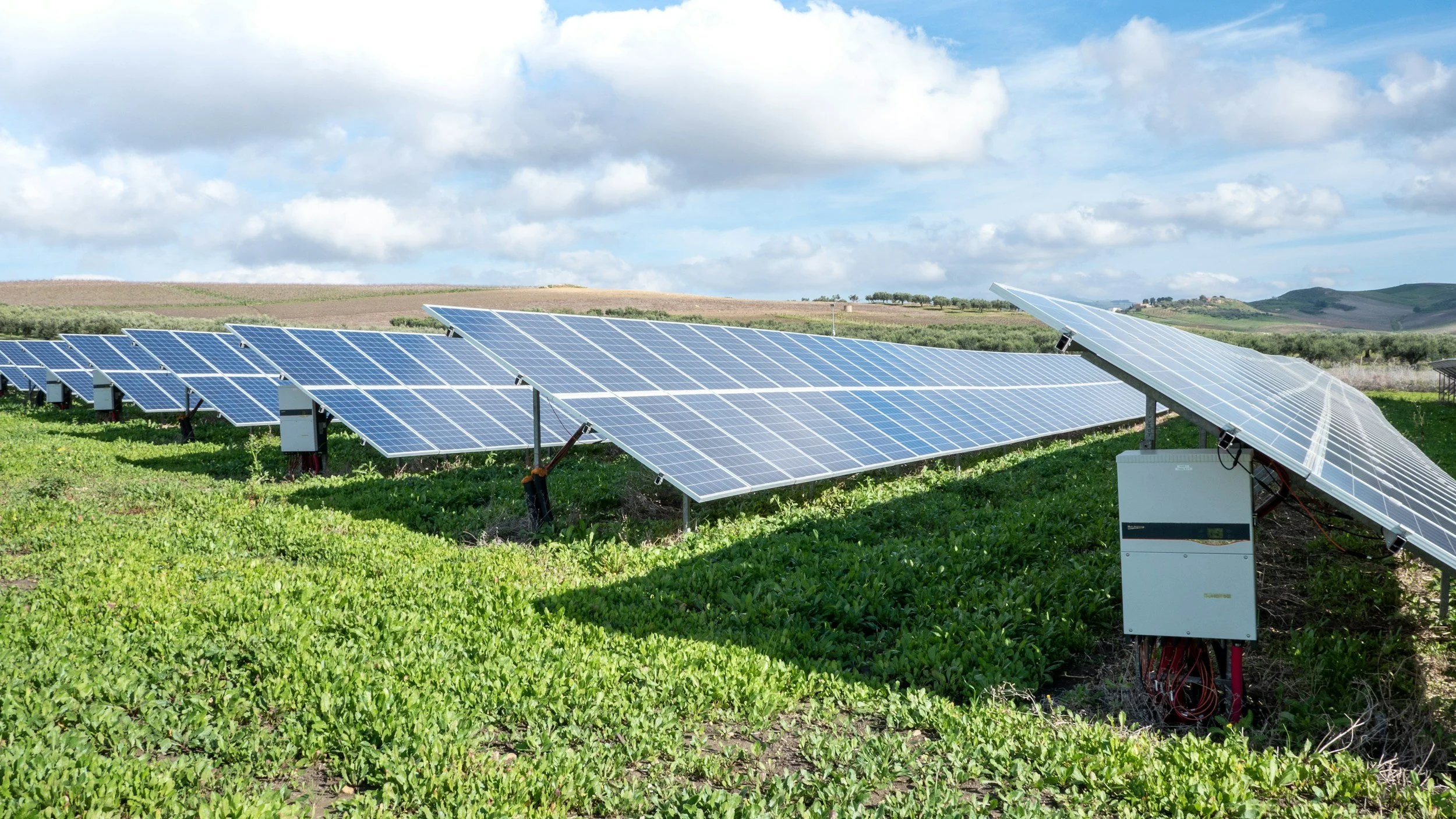
Over the last decade the limiting factor in U.S. solar deployment was cost. Panels were expensive, financing was cautious, and scale was uncertain. That constraint has largely disappeared.
Today, the challenge is land. Utility-scale solar increasingly competes for the same flat, sunny, grid-adjacent parcels that underpin American agriculture. Out of that tension has emerged a concept that is now attracting institutional attention: agrivoltaics.
What is Agrivoltaics?
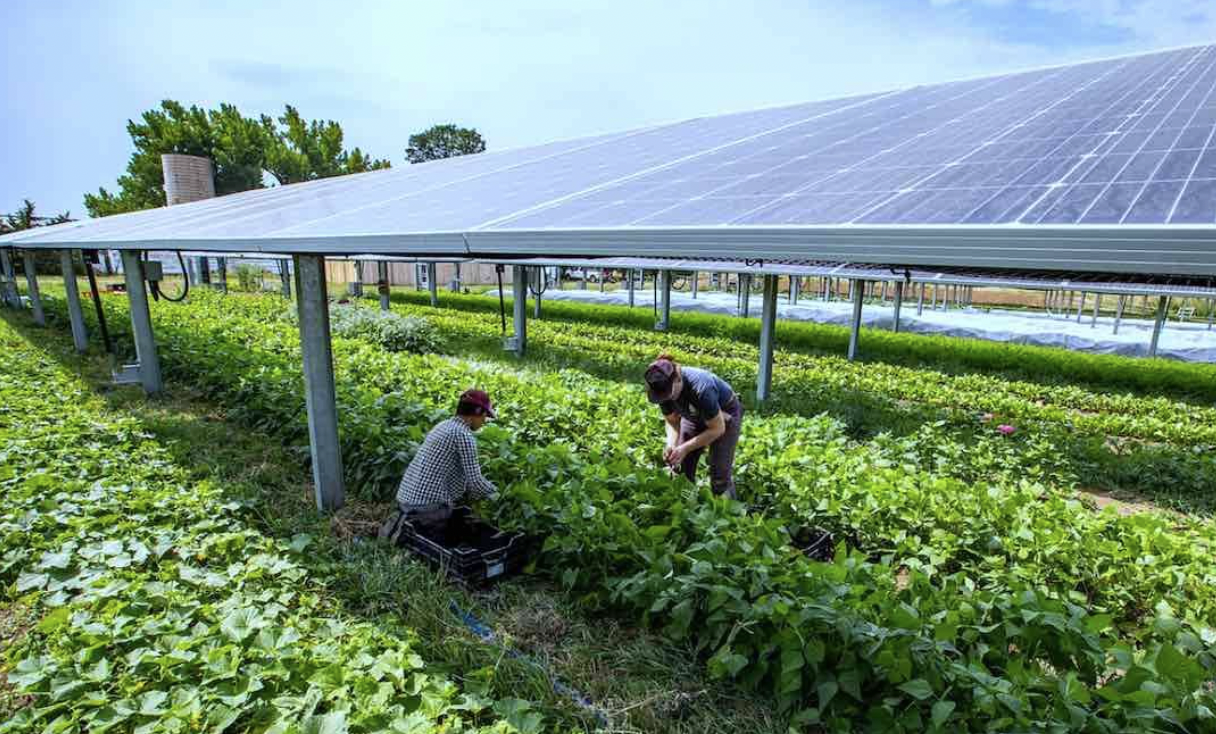
Agrivoltaics reframes the solar-versus-farmland debate as a land-use optimization strategy rather than a tradeoff. Instead of converting agricultural land into single-purpose energy infrastructure, projects preserve agricultural function beneath solar arrays with sheep grazing becoming the most operationally viable.
National laboratory research has identified grazing as a core pathway because livestock can manage vegetation under panels, reduce mowing and herbicide, all while maintaining the productivity of the land.
The idea is not new. Early dual-use pilots appeared in the 2010s alongside pollinator-friendly solar initiatives, with grazing used informally where site conditions allowed. Adoption accelerated between 2020 and 2022 as utility-scale solar expanded into farm regions. University extension programs, including work out of Cornell, began framing solar grazing less as an environmental experiment and more as a pragmatic response to land conflict. From 2021 to 2024, reported grazed solar acreage grew from roughly 15,000 acres to more than 129,000 acres, reflecting a shift to repeatable practice.
In 4 years grazed solar acreage grew an 8.6× expansion
By 2024, joint tracking by industry groups and national labs documented 506 solar sites across 30 states using sheep for vegetation management. While still a small share of total U.S. solar land, the growth rate has been notable.
Key Players:
Firms such as Greenbacker Capital have publicly discussed designing solar projects from inception to accommodate grazing, treating agrivoltaics as part of a broader asset-management strategy rather than a sustainability overlay.
Corporate capital has also participated. Amazon has incorporated agrivoltaic features into portions of its renewable portfolio, framing dual-use projects as tools for land stewardship and supply-chain resilience rather than standalone profit centers.
At the core
Sheep-grazed agrivoltaics functions as revenue stacking and risk compression, even if the revenue component is modest. For solar owners, grazing substitutes for mechanical mowing and chemical vegetation control, turning a recurring operating expense into a low fuel intensity service contract.
For landowners and farmers, solar introduces non-correlated income relative to commodity cycles, while grazing contracts can stabilize cash flow during periods of agricultural margin pressure.
For developers, dual-use projects can reduce opposition by preserving an agricultural identity, often translating into shorter permitting timelines, fewer redesigns, and lower litigation risk, outcomes that directly affect project-level IRRs.
The barrier is not technical feasibility but structural friction. Incentives are misaligned across the project lifecycle. Developers and EPCs are rewarded for minimizing upfront costs and reaching commercial operation quickly, while long-term owners bear operating and risks over decades.
Designs can require higher initial capex, even though the payoff accrues later. Lenders seek standardized terms around liability, animal welfare, staffing continuity, and equipment damage. Operationally, grazing is a logistics business, requiring labor, water access, predator control, and compliance systems across geographically dispersed sites.
Comparably, community solar spent years constrained by fragmented rules before standardization unlocked capital. Agrivoltaics appears to be at a similar stage. The practice is proven, adoption is rising, and the remaining barriers are institutional rather than technological.
Agrivoltaics today occupies a familiar position in the infrastructure cycle: too established to ignore, too fragmented to be fully priced. The next phase will depend less on innovation in the field than on standardization in contracts, insurance, and underwriting. If that occurs, the market may come to view sheep-grazed solar not as a niche sustainability play, but as a rational response to one of the energy transition’s most pressing constraints— land.
