Weekly Roundup Sept 7-11
Late Summer Doldrums Heading Into the Fall
By: Charlie Green
17 September, 2026
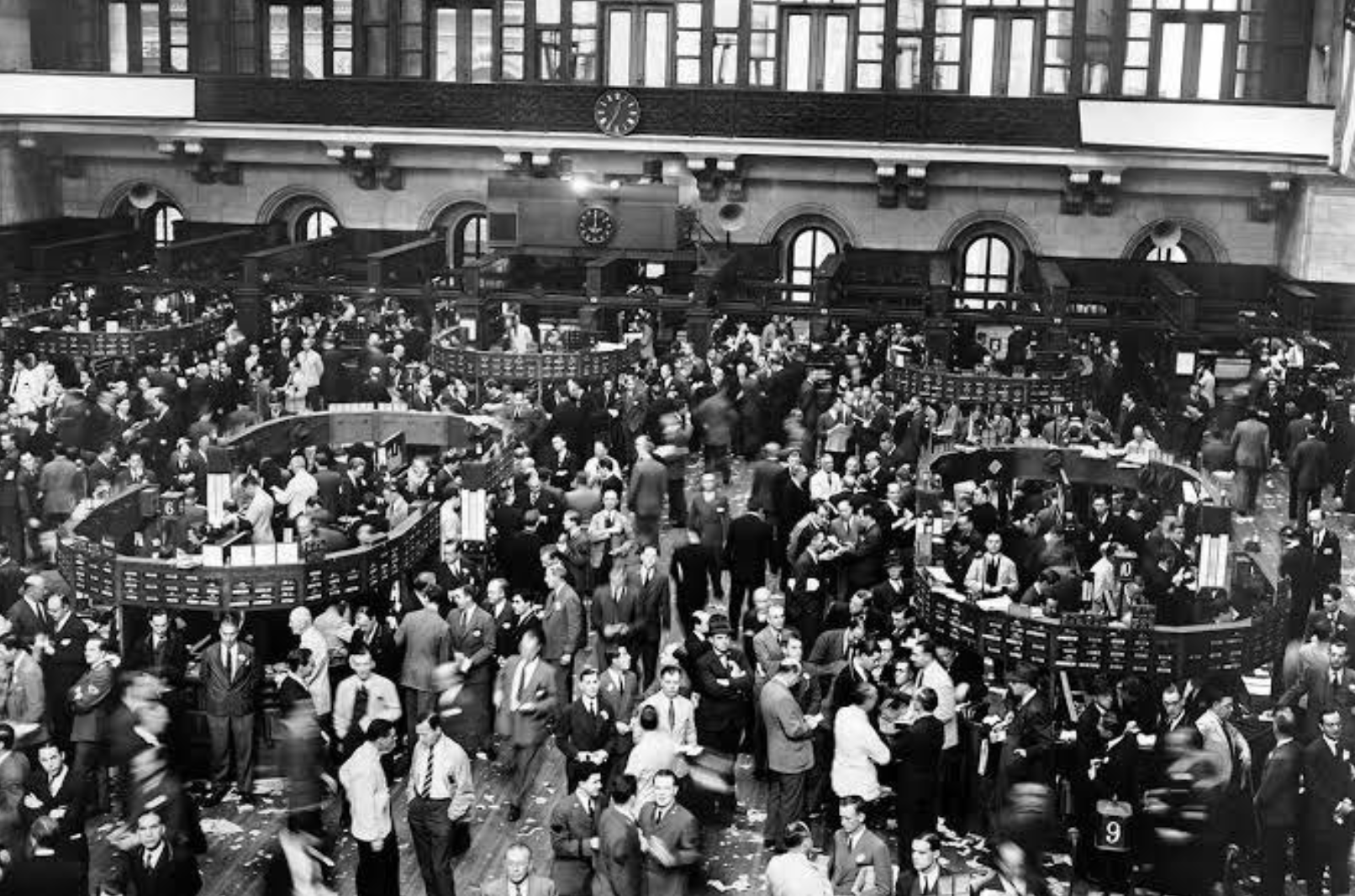
Markets were closed Monday, 9/7, for Labor Day, so it was a four-day week. Every session through Thursday ended down, with the S&P 500 posting its fourth straight loss on Thursday.
Tuesday, 9/8: S&P 500 −0.58% to 7,673.52; Dow −1.18% to 52,786; Nasdaq −0.32% to 26,421.
Wednesday, 9/9: S&P 500 −0.48% to 7,636.36; Dow −0.77% to 52,381; Nasdaq −0.64% to 26,253; Russell 2000 −1.36% (small caps are getting hit hardest by rising rates).
Thursday, 9/10: The Producer Price Index (U.S. Bureau of Labor Statistics) showed wholesale prices up 0.4% for the month and 5.4% year over year, up from 4.8% in July. Existing home sales (National Association of Realtors) fell 2% to 3.98 million, the lowest since June 2025. Wholesale inventories (U.S. Census Bureau) and weekly unemployment claims (U.S. Department of Labor) were also released.
Friday, 9/11: Friday closed with a strong return, helping recover some of the week’s losses. The Consumer Price Index (U.S. Bureau of Labor Statistics) came in at 3.4% year over year, unchanged from July, with core inflation at 2.4%, down slightly from 2.5%. Prices rose 0.4% for the month, with gasoline up 3.9% and accounting for over a third of the increase. After the report, futures traders priced in an 85% chance of a rate hike at next week’s Fed meeting, up from 71% the day before.
U.S. strikes on Iran near the Strait of Hormuz caused oil prices to spike and increased tensions between the two countries.
Gold and Silver
Gold is holding steady at around $4,440, still elevated. Silver is trading at $64.90 per ounce after sliding about 2.6% on Friday following the CPI report. Both metals are worth watching right now because investors use them to hedge against inflation. When gold and silver stay this high, it usually means the market expects prices to keep rising, which can be a leading signal that interest rates are headed higher.
Earnings This Week
The big earnings call of the week was Oracle, which reported after the close on Thursday. Oracle’s results set off a rally in AI hardware names on Friday, with Dell surging about 12% to a record high.
Big Movers of the Week
A handful of companies had news this week that clearly moved their stock, not just the overall market:
ACV Auctions (ACVA) jumped roughly 44–49% after Copart agreed to acquire the company in a deal valued at around $1.9 billion. It finished the Sept. 4–11 period up about 49%.
Dell (DELL) gained about 12% on Friday alone, hitting a record high alongside other AI and server hardware companies following Oracle’s results.
Heading Into This Week
The market story has continued to develop since Friday’s close, particularly across AI-related stocks.
Hewlett Packard Enterprise (HPE) jumped about 12% on Friday, then plunged roughly 11% on Monday after an analyst downgrade during the broader AI selloff. The narrative completely flipped in one trading day.
CrowdStrike (CRWD) rose roughly 14% on Monday as cybersecurity became one of the standout areas, with investors reassessing which software businesses could benefit from or be insulated against changes in AI development.
Corning (GLW) dropped about 14% on Monday, one of the biggest S&P 500 losers, during the selloff in AI-related hardware and infrastructure companies. Coherent and Teradyne were also down around 13%.
Amgen (AMGN) lost roughly 13.7% over Sept. 4–11 despite the company highlighting its growth drivers and drug pipeline, making it one of the biggest large-cap weekly losers.
Bank of America (BAC) fell about 5.1% on Monday after CEO Brian Moynihan said he expects Q3 investment banking fees to decline at least 10%. That’s a good example of management guidance directly affecting valuation expectations.
The bigger story heading into this week is AI. Nvidia is down about 3.4%, Micron more than 5%, Broadcom and AMD more than 4%, and the Philadelphia Semiconductor Index is down roughly 5.9% after leaders at major AI companies raised concerns about the pace of AI development. Meanwhile, some software and cybersecurity companies are rallying sharply.
Job Market
The August jobs report came in much stronger than anyone expected. Employers across the country added 162,000 jobs last month, roughly triple economists’ expectations of 55,000. This was a big step up from July, and the job market clearly exceeded economists’ predictions. On top of that, June and July were both revised higher than before, adding another 55,000 jobs that were missed in the earlier reports.
Unemployment remained steady at 4.1%, and more people came off the sidelines, with labor force participation ticking up to 61.6% from 61.4%.
The rest of the week’s labor data didn’t paint as pretty a picture. Job openings rose slightly to 7.27 million in July but were still short of the predicted 7.35 million. ADP’s private payroll report showed employers adding 38,000 jobs in August, by far the weakest reading since January and a strange contrast to the government’s number. Jobless claims for the week ending August 29 landed at 206,000, the same rate as the week before.
Put it all together, and the job market looks steady rather than booming. That matters right now because a strong headline number takes away one of the Fed’s reasons to hold off on raising rates next week.
Oil Prices/War
Brent crossed $100 on Wednesday for the first time since July ($100.80), then hit $105.37 on Thursday (+3.6%). WTI hit $100.10 on Thursday, its highest since May.
Iran fired missiles at U.S. warships over the weekend, with reports of a second attack on Monday. In response, U.S. Central Command destroyed five Iranian oil tankers on Monday, 9/8 (four in the Gulf of Oman and one near Kharg Island).
Strait of Hormuz traffic is at its lowest since May: only 10 vessels are transiting per day, versus 130 before the war.
Regional spread: Houthi attacks on Saudi Aramco facilities wounded 73 people, and Saudi Arabia retaliated. These were described as the worst attacks since a truce ended in July.
Consumer angle: Regular gas is averaging $4.14–$4.15 nationally, nearly $1 higher than on Labor Day 2025.
The Fed, Inflation, and Growth
Where things stand right now:
Fed funds rate: 3.50%–3.75%. The Fed meets September 15–16, and markets are pricing in roughly a 70% chance of a 0.25% hike to 3.75%–4.00%. This would be the first hike of the year after the Fed held steady in July.
CPI: 3.4% year over year in August, unchanged from July (core 2.4%). Prices rose 0.4% for the month, driven by gas.
PPI: 5.4% year over year in August, up from 4.8% in July. Wholesale inflation is accelerating.
PCE (the Fed’s preferred measure): 3.7% year over year in July, well above the 2% target.
The takeaway is that every inflation number is running above target, gold and silver are elevated, and the job market just came in strong. That’s why the conversation has flipped from “when will the Fed cut?” to “how many times will the Fed hike?”
Yield Pressures + Canada Trade War
Rates: The 10-year Treasury yield hit 4.84% on Wednesday, a 52-week high and the highest since late 2023. The 30-year is above 5.25%, near its highest since 2007. The 30-year mortgage rate climbed to 6.85%, the highest since June 2025.
Here’s the full timeline of the Canada/U.S. trade war:
In September 2025, Canada’s original counter-tariffs on the U.S. covered steel, aluminum, and auto parts. Those went into effect last year and never went away. Now, in 2026, many of the same issues have resurfaced.
On July 1, 2026, the formal USMCA “joint review” kicked off, and the three countries had to decide whether to extend the deal to 2042 or let it lapse in 2036. Trump’s team has been using the tariffs as leverage in that review.
In late July 2026, Trump announced a 50% tariff on $20 billion of Canadian goods, including dairy, hockey equipment, alcohol, and even cement. Trump commented on the dispute, saying Canada is “taking the benefits of being a state without being a state.” He also threatened to block Bombardier aircraft sales unless the manufacturing plant is moved to the USA.
In early September 2026, Carney announced that Canada will match dollar for dollar, rate for rate. Canadian leadership strongly criticized the U.S. measures, saying, “You’re at war when you get attacked. We got attacked.” Canada’s counter-tariffs took effect September 8 on roughly $20 billion of U.S. goods: 50% on apparel, cosmetics, toys, sports equipment, electrical machinery, and furniture; 25% on industrial machinery, carpets, and textiles; and 15% on ag machinery parts. The list also includes steel, dairy, appliances, pulp and paper, and electronics. Canadian provinces are still boycotting U.S. alcohol.
Key Terms
Consumer Price Index (CPI): Tracks changes in retail prices paid by urban consumers for everyday items like food, shelter, and energy.
Producer Price Index (PPI): Measures the average change in selling prices received by domestic producers for their output. Think of it as inflation before it reaches the store shelf.
