The Rising Floor Beneath Copper
By: Spencer Graham
February 20, 2026
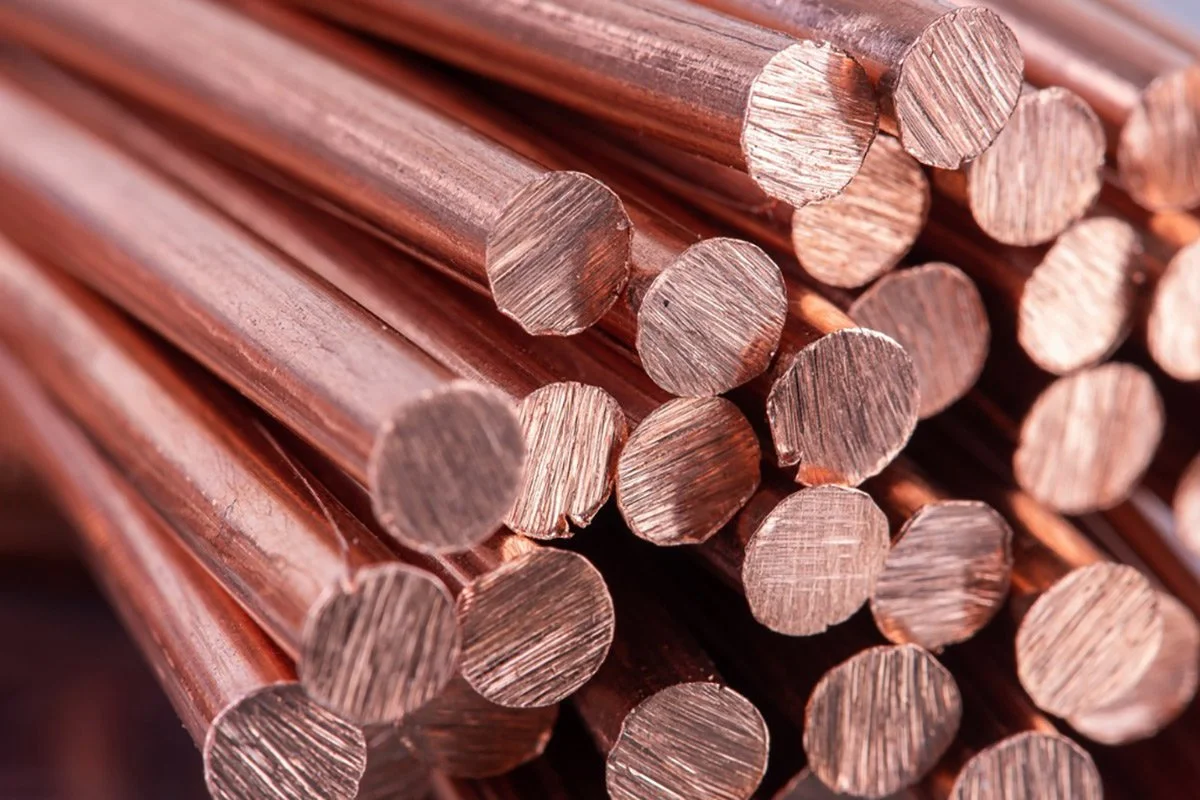
In this new age of AI, investors speculate about how data centers are constrained by chip production. But there are hidden constraints underground. Copper is essential to AI data centers because it is used in nearly everything that involves power. Leading to the demand for copper being at an all-time high.
In the past, there have been spikes in copper demand for varies reasons. In the 2000s, copper was around $1 per pound and spiked to $4/lbs in 2011. This was caused by China’s industrialization. China went from around 20% of global copper demand to 40% in this short time. The spike in copper prices was caused by insufficient supply to support China's transition.
The copper market was able to recover after these events because the production in China had slowed, and growth shifted from industry to services. This caused the price of copper to fall back down to $2/lbs.
From 2020 to 2022, the price of copper surged. During this time, mining production for copper had shut down along with numerous logistics disruptions. The copper price jumped to $4.5/lbs in 2021. It was then able to recover because of slowed housing markets and a stronger dollar.
Conditions today are different because the copper industry cannot expand supply fast enough to meet the layered demand from AI, electrification, and grid expansion. As a result, copper may settle at a structurally higher long-term price floor.
Layered Demand
In 2026, expanding EV charging networks contribute to the market for copper. EV cars require 3 to 4 times more copper than gas-powered vehicles. The global production for these vehicles isn’t slowing down; there were 3.6 million more EV cars produced in 2025 than in 2024. The copper that is used in these engines is only one of the factors putting upward pressure on the copper market.
Another reason why copper use is increasing is the buildout of EV charging grids. With more and more people buying Electric cars, it only adds more pressure to grid expansion. In grid expansion, there is copper in the chargers themselves (0.7kg in level 2 chargers, and 5.4kg in fast chargers) and in the supporting grid. Underground lines require 19.5 tons per kilometer, and distribution cables require 3.7 tons per kilometer. This doesn’t seem like much compared to other factors, but considering the global scale of these grid expansions, these numbers multiply.
One of the biggest uses of copper is in AI data centers. One AI data center can use up to 50,000 metric tons or 110,200,000/lbs of copper to operate efficiently. Some of the main components that use copper include power distribution, thermal management, and data transmission.
AI data centers, grid expansion, and the creation of EV’s prove how the demand is rising for copper, but how is the supply responding?
Supply of Copper
The supply of copper has recently come into question. There are concerns about mine development times, geology, possible political risk, and the gap between the required investment and the planned investment.
From the discovery of copper to the production of 10-15 years is a common timeline. This process takes a long time because of the actual time spent finding copper deposits, environmental reviews, and building infrastructure. Additionally, only 14 new copper deposits have been discovered in the past 10 years compared to 225 in the previous 23 years. Meaning that the action put in place today for additional sources of copper won’t come to fruition until the 2030’s, if they can find deposits to mine.
Another major problem with the supply of copper is the capital required. Some quotes suggest that, for companies to maintain copper production as it currently stands, the required investment is $250 billion over the next 10 years. But as it currently stands, the industry only has $100 billion planned for investment. The reason that $250 billion is required is because a single large-scale copper mine can cost $5-$10 billion before producing anything meaningful.
The mines that already exist are facing issues with rising costs. Copper ore grades have declined 40% since 1991, and low-grade ore’s require more energy to liberate the copper.
In addition, the main countries where copper is sourced include Peru, the DRC, Chile, and the United States. When copper prices rise, we have seen royalty reform debates in Chile, as well as periodic tax and community conflict issues rising in Peru. There are also permitting issues as well as environmental reviews, impacting copper mines.
Copper has always been cyclical. In the past, demand rose because of a singular driving force on multiple occurrences, then that force weakened and prices fell back down. Today's demand is broader. AI data centers, building EVs, and grid expansion are increasing copper use at the same time.
With the rapid rise in demand, supply cannot adjust as quickly. Between mine production, capital requirement, ore grades, and social issues, there is no clear solution. Copper may continue to be volatile, but the long-term price floor is only rising.
