Not Everyone Loses When Oil Hits $100
By: Spencer Graham
Mar. 27, 2026
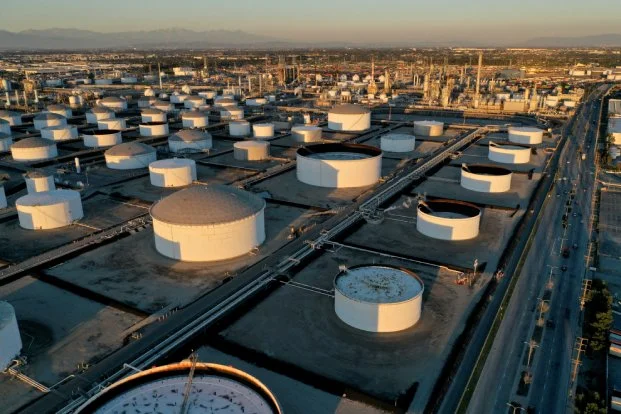
Oil hit $100 per barrel on March 8th. Countries are tightening their energy supply and production. Fertilizer shortages are raising food costs, while insurance rates climb for freight companies navigating the Strait. In every supply shock, capital flows elsewhere so where is it going now?
U.S. shale producers are clear winners. With oil jumping from $60 in January to $100 in March, companies like Pioneer Natural Resources, Devon Energy, and Diamondback Energy are set for gains. U.S. oil producers expect over $6 billion in added 2026 earnings from higher crude prices which is having a big impact on the oil industry. Political disruption else where is being converted into profit for U.S balance sheets.
U.S natural gas is emerging as a structural winner. Global LNG prices have surged, with the Japan-Korea Marker jumping over 60% and European benchmarks spiking. While prices in Henry Hub (a natural gas pipeline located in Louisiana) remained relatively stable. This price shift has created a powerful advantage for U.S. industrial users, whose prices remain stable while foreign competitors absorb volatility.
Another obvious winner is Saudi Arabia. They have leveraged their East-West pipeline to reroute through the Red Sea, allowing it to maintain output while neighboring producers face constraints.
What does this mean for the Future?
The first major consequence will be a wave of consolidation in U.S. shale. Elevated oil prices are flooding big producers with cash. This creates the perfect conditions for M&A. Exxon Mobil and Chevron are now incentivized to acquire smaller oil companies that produce in the United States. The increasing risk in the Middle East will push producers to invest in domestic oil. These companies have a chance to perform long-term repositioning to hedge against potential risk in the future.
The second major shift will be in U.S. natural gas exports. This conflict has turned natural gas into a geopolitical asset. Europe and Asia are actively looking for alternatives to Middle Eastern supply, and the U.S. is in a position to meet that demand. This will likely push policymakers to reconsider restrictions on LNG export permits. What was previously a political debate is now becoming an economic and strategic priority. The scope of expanding LNG infrastructure goes beyond profit, and toward global influence and energy security.
The final shift is how the market values a safe energy supply. Even if the Strait of Hormuz reopens, the world has seen what these disruptions can cause. Companies and investors will no longer treat geopolitical disruption as a rare event. Instead, it will be built directly into pricing and decision-making. This means producers outside of high-risk regions like the U.S., Canada, and Norway will likely see long-term benefits. Stability itself is becoming a competitive advantage.
The Strait of Hormuz crisis is being viewed as a tragic for the stock market and economy. But behind all the negatives, a new financial structure is already forming. Companies are moving toward consolidation, and markets are beginning to favor stability over cost. By the time the conflict is resolved, these shifts will already be in place. The biggest takeaway is that the winners are not reacting, they were already positioned before most people started paying attention.
