No More Plan B: Oil’s Last Detour Comes Under Fire
Understanding how Yemen's Red Sea coast became the war's newest chokepoint and what it means for Saudi Arabia's route around Hormuz.
By: Raymond Kappel
22 September, 2026
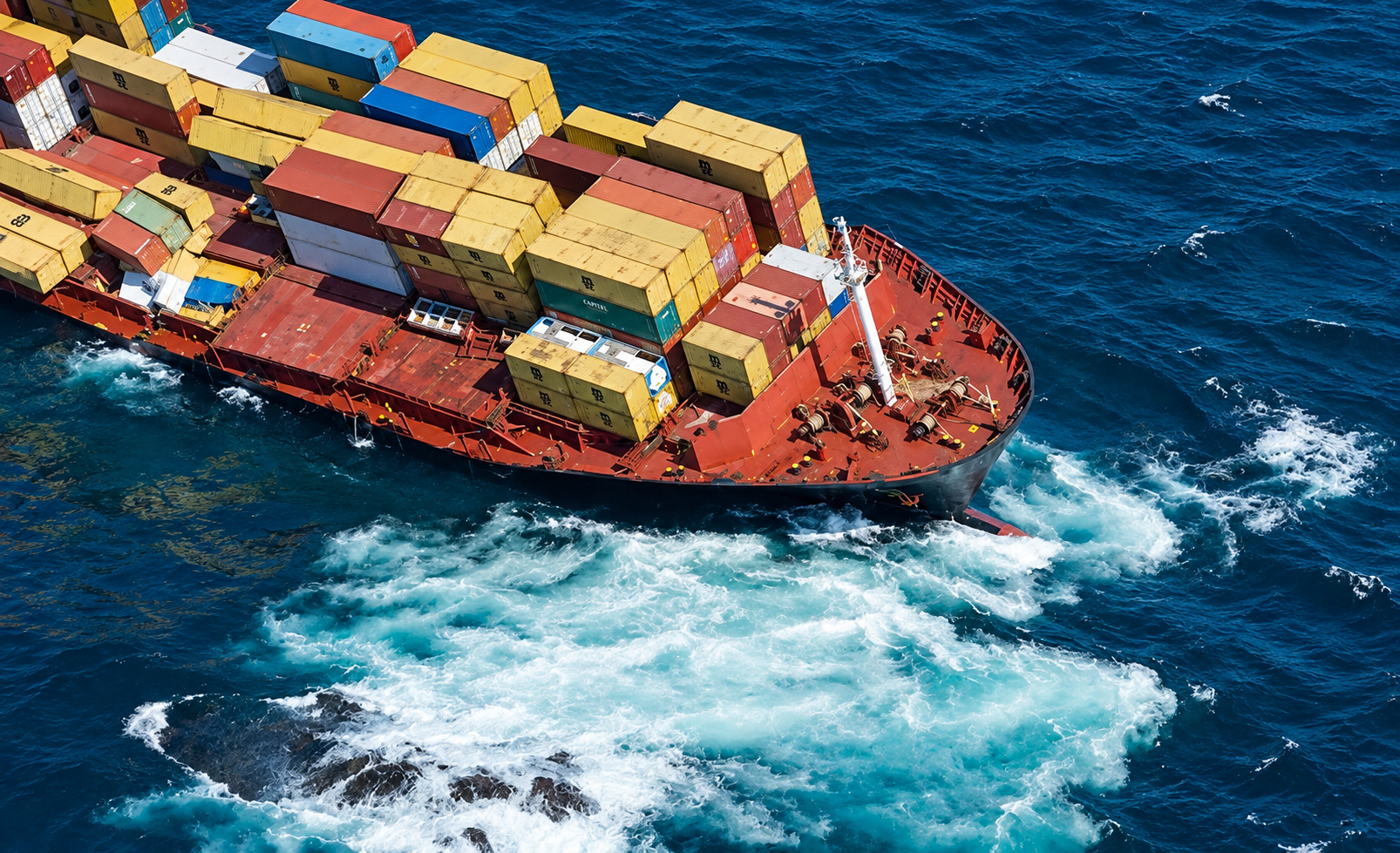
With the Strait of Hormuz effectively closed due to the war with Iran, there has been an increase in oil tankers moving through the lesser-covered but equally significant Bab al-Mandeb Strait. The Bab al-Mandeb Strait links two of the world's most vital trade corridors. To its south, the strait opens into the Gulf of Aden and onward to the Indian Ocean. To its north, it feeds into the Red Sea, which connects via the Suez Canal to the Mediterranean Sea. Recent advances from the Houthis, an Iran-backed proxy group in Yemen, have significantly increased the risk of crossing this narrow strait. On August 6th, 2026, the Houthis began conducting a new offensive campaign against the Saudi-backed and internationally recognized Yemeni government.
The Houthi offensive has been wildly effective. As the campaign progressed, the Houthis claimed the crucial port city of Mocha, and by September 11th, they had gained control over Yemen’s Red Sea coast. The same day the Houthis secured major gains along the coast, Saudi Arabia shut down its crucial East-West oil pipeline after it was struck in multiple drone attacks launched from Iraq. The 750-mile oil pipeline was built in 1981 during the Iran-Iraq War specifically to bypass the Strait of Hormuz. Before the pipeline was disabled by the strikes, it had the capacity to move roughly 7 million barrels per day, about half of what the Strait of Hormuz sees exported during peacetime.
Oil prices have followed the escalation closely. On July 22nd, after Houthi forces struck a Saudi tanker, Brent crude rose to $100 a barrel for the first time since May, an increase of about 40 percent for the month. By September 8th, ahead of the pipeline strike, Brent had reached $99.22 and WTI had reached $94.60, the highest marks in several weeks. When the East-West pipeline was struck on September 11th, Brent traded near $108 a barrel. Two days later, on September 13th, Brent closed at $105.68, and WTI settled at $101.39 after gaining roughly 9 percent the week prior. By September 17th, Brent had fallen to $103.61, down about 2 percent from the previous day, though still up nearly 14 percent over the past month and more than 53 percent compared to a year earlier.
The East-West pipeline itself runs 1,200 kilometers from Abqaiq in Saudi Arabia's Eastern Province to the port of Yanbu on the Red Sea. At full capacity, it can move 7 million barrels per day, with about 2 million barrels per day directed to domestic refineries on the western coast and the remaining 5 million available for export. Tanker-tracking data shows that actual exports through Yanbu had not reached that theoretical maximum even before the strike. According to Vortexa, loadings rose to about 3.7 million barrels per day in early September, up from 3.2 million in August. Kpler put the figure closer to 2.9 million barrels per day in September, up from 1.5 million in August. Following the strike, Saudi officials said roughly half of the pipeline's capacity could be restored within days, with full operations expected within six weeks.
Saudi Arabia has also moved to offset the shortfall through ship-to-ship crude transfers near Oman, providing an alternate route for Asian refiners that had been receiving oil through Yanbu. The Houthis, meanwhile, have continued to hold territory along the Red Sea coast, including Perim Island and the Hanish Islands, both of which sit within the Bab al-Mandeb Strait. Yemeni government forces claimed to have recovered some ground near the strait on September 13th, though the coastline and its two key islands have remained under Houthi control since September 14th.
As the Houthis continue to advance and target the Saudi-led coalition in Yemen, the region will continue to destabilize. This pressure will not only give the Houthis and Iran greater leverage over global oil flows but will also test the strength and resilience of the world's number one oil exporter, Saudi Arabia. Although Saudi Arabia’s initial requests to the U.S. for military assistance have been shrugged aside by the Trump administration, don’t count out the possibility of the U.S. war in Iran expanding to two fronts.