By: Spencer Graham
16 November, 2026
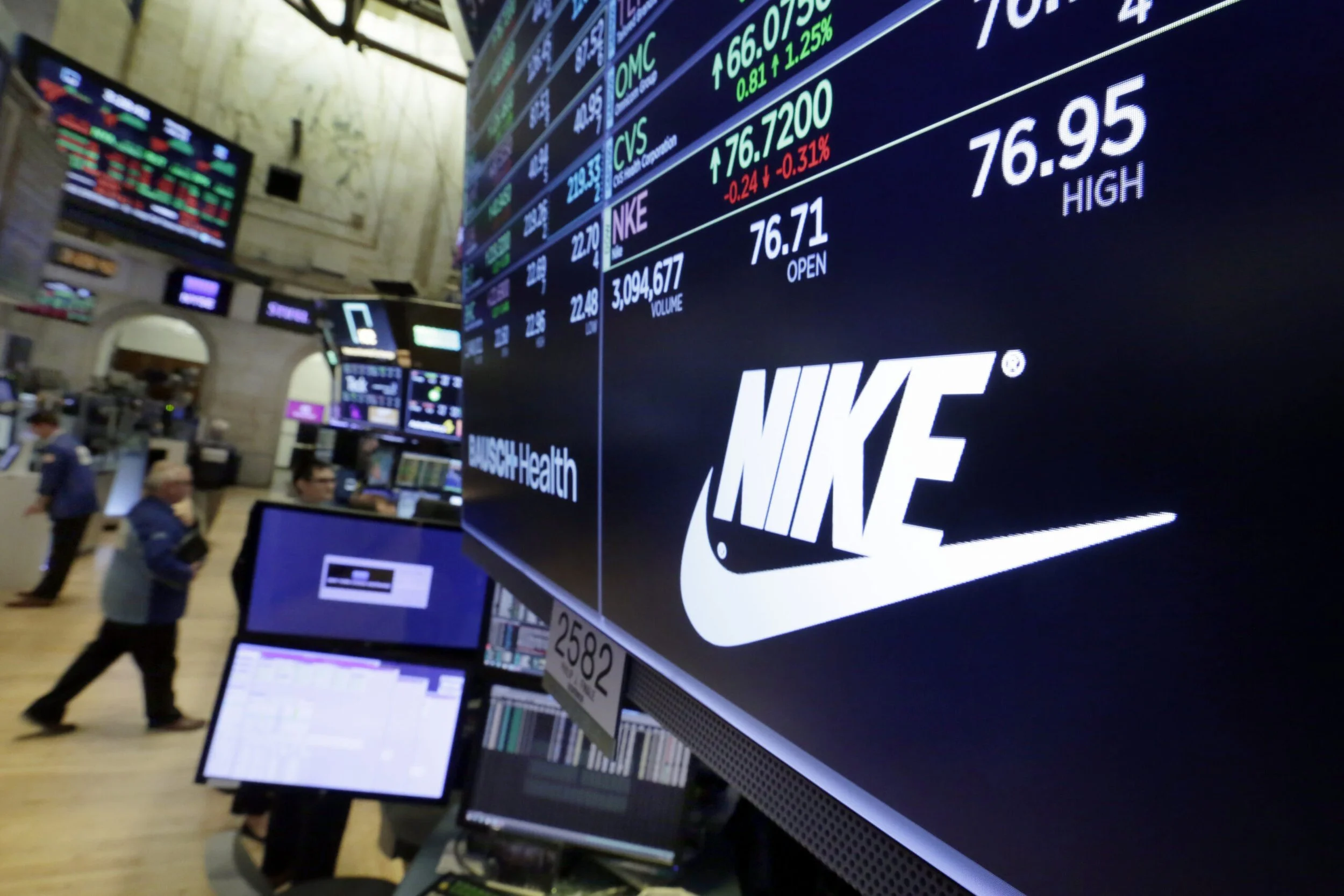
Currently, Nike is trading at $37.99 per share. Nike last traded at $38 per share in 2015. Nike has been one of the most influential companies of our generation, but now it is a different company than when it was at $165 per share. What changed at Nike to make the share price fall? Has the company meaningfully changed since its peak? The answers to these questions can be found if we take a step back in time.
Nike is a seasoned company that has been public since 1980. In the early stages of the company, it was solely focused on running. It made most of its money from shoe sales, and around the time of its IPO, it was the top athletic shoe brand in the U.S. After shoes, Nike was trying to develop more of its apparel and expand into other sports. This expansion didn't take off until Nike signed Michael Jordan in 1984. This relationship between Nike and athletes would become fundamental to its business model and brand image.
In 1990, Nike was doing around $2.2 billion in revenue, and in 2020, it was doing around $37.4 billion. Success for Nike was determined by brand marketing and relationships with athletes. A short list of athletes it sponsored includes LeBron James, Kobe Bryant, Tiger Woods, Cristiano Ronaldo, and many more. These key relationships with athletes at the top of their sports made people worldwide want to wear the same shoes. Along this same timeline, Nike became famous for its marketing. Some of its famous ads were "Just Do It," "Bo Knows," "Hello World," and many more. These ads complemented the brand identity Nike was creating: top athletes use Nike because it is the best.
In 2020, Nike was transitioning from CEO Mark Parker to John Donahoe. This decision would have a detrimental impact on Nike. In the past, Donahoe served as CEO of ServiceNow, eBay, and Bain & Company. John Donahoe had never sold shoes before this role at Nike. He had an issue with the company's reliance on retailers for product sales. To combat this, he wanted to push more toward selling directly to customers. He wanted to own customer data, capture full margins, and be less dependent on retail stores.
At the height of COVID-19, the direct-to-consumer business was flourishing and seemed like the obvious choice. Initially, Nike saw a jump in revenue from FY2020 to FY2023, from $37.4 billion to $51.2 billion. But this pullback from retailers had one big problem.
The open shelf space that these retailers had was now being occupied by competitors. New Balance, Hoka, On Running, and ASICS took over that empty shelf space in place of Nike.
Nike would soon find out that customers weren't as brand loyal as it thought. Customers began purchasing shoes from other brands. After Donahoe left the company, Nike began to feel the impact he had made. Nike's revenue was flat in 2024, then started to decline in 2025, and then remained flat again in 2026. This was the first big problem for Nike.
Nike's marketing and brand image also made a shift. In the past, the company collaborated with the best athletes in the world to promote its brand. It made a shift toward cultural issues.
Some of its most controversial ads were "Dream Crazy," featuring Colin Kaepernick, and "For Once, Don't Do It," an ad released after George Floyd was murdered. Nike also featured an ad that said, "Runners Welcome. Walkers Tolerated."
These cultural messages alienated parts of the consumer base. In response to this specific ad, Nike's competitors began releasing ads supporting all of the people who purchased their products.
Currently, investors are conflicted about whether Nike is in the capital return phase or the decline phase. Nike is trading at a P/E multiple of 18x, while in the past it has traded around 30x. The reason investors are worried is the declining top-line growth with no vision for improvement.
Bloomberg expects Nike's revenue to decline another 9% for FY2027 while the company tries to reposition itself. Nike's operating margin has been around 12%, and Bloomberg projects this to fall to around 7% by 2030. Analysts project a target price of $25–$45; the average is $33, below the current price of $38.
Estimates for FY2027 suggest Nike's dividends aren't fully covered by earnings, and the company is using cash to cover the difference. If earnings fall, there could be a point where Nike needs to cut its dividends, which would impact the stock even more.
In China, revenues fell by 22% in Q1 of FY2027. The reasons for this drop stemmed from Xinjiang backlash (2021) resurfacing, a weaker consumer, and repeated promotions to clear inventory. This drop is important because Adidas was able to grow by 13% in China last year.
I created my own DCF and found a 20.54% downside with a price target of $30.19. In this, I had revenue growing at a CAGR of 0.07% and exit multiples of P/E: 20x and EV/EBITDA: 12x. In my opinion, Nike has earned these lower multiples because of its closeness to the decline phase.
Nike's stock price has dropped 77% in the last five years. The last time the price was this low was in 2015.
Elliott Hill is Nike's new CEO; he has been at the company for three decades. When he stepped in as CEO, he was inheriting a declining business. Hill's vision for the company moving forward is putting performance products and athletes first, rebuilding wholesale partnerships, and focusing on saving money while limiting charges.
Hill is giving up near-term revenue to fix the brand. Nike is cutting Jordan and sportswear supply and cleaning up discounting, which is why FY2027 revenue is guided down by a high-single-digit percentage.
The bull case for Nike is that the company can mend its damaged consumer relationships and get back in front of consumers. It is also reliant on Nike returning to the brand it was previously, with the same influence. If this situation plays out, then it is a perfect time to buy the stock. The bet on the bull case mainly relies on the brand being able to redevelop its competitive advantage through marketing.
For the bull case, if Nike is able to prove to investors that it is fully in the capital return phase, it could earn higher exit multiples. Nike would need to earn a P/E above 27x and EV/EBITDA above 17x to be able to see some upside in the stock.
The bear case for Nike is simple. The company isn't able to get back to what it was because of the damage to relationships with wholesalers, and it can't regain its competitive advantage through brand image. If Nike trades below a terminal P/E of 28x and EV/EBITDA of 17x, then the stock isn't worth buying.
In my opinion, it is hard to purchase companies with a narrow moat. Most investors' money would be better spent in other places, and this long-run bet on Nike's marketing is dicey.
Overall, the company's forward trajectory is very uncertain and could play out in numerous ways.
Disclaimer: Not investment advice.