Certainty, Sanctions, and Supply
The Past Month in Venezuela
By: Joseph Godshall
Feb. 5, 2026
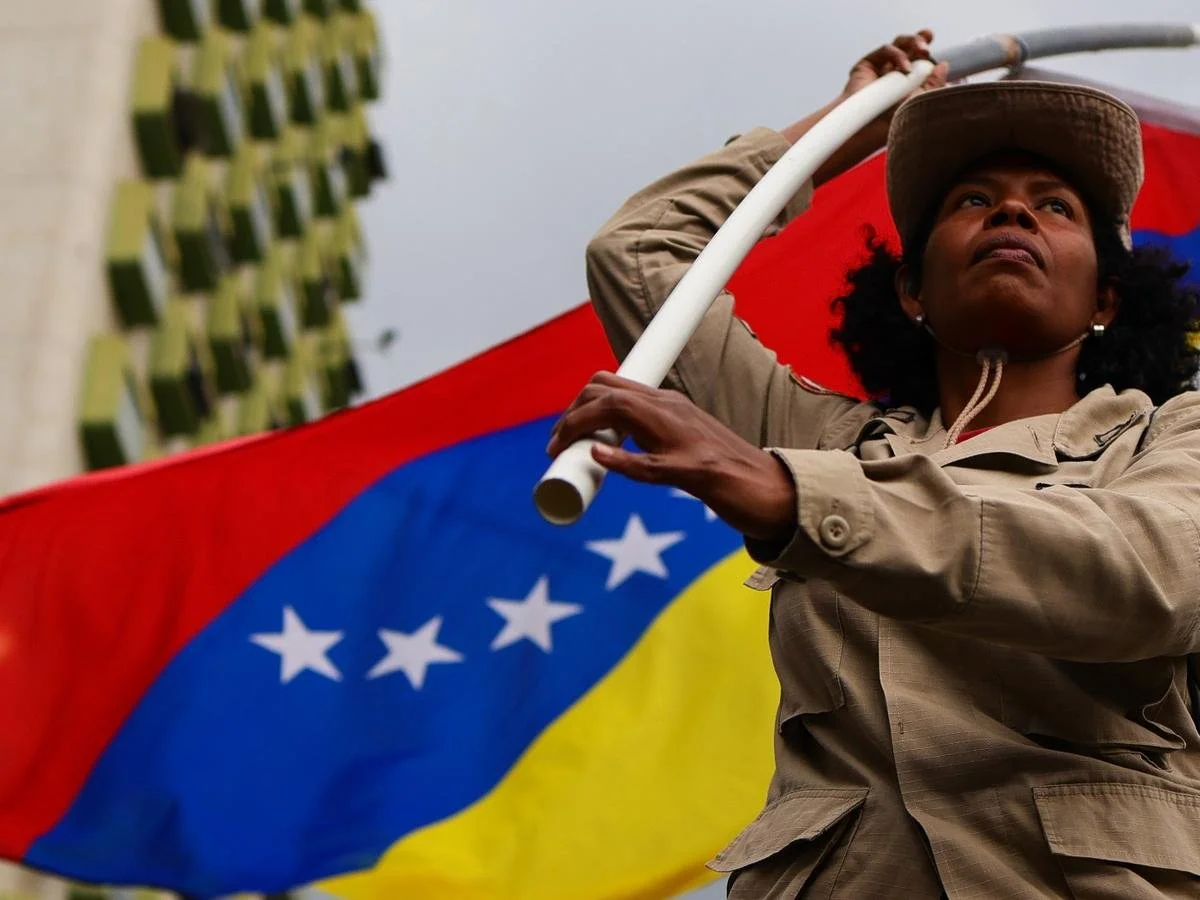
In the span of only a few days into the new year, Venezuela catapulted into geopolitical prominence as its already fragile authoritarian status quo came crashing down with the capture and removal of President Nicolas Maduro and his wife after a U.S. military operation. While this event has garnered international attention since its execution, the significance of this event rests not only in international politics and law, but also within financial nuances encompassed in Venezuela's oil supply. From oil pricing and refinery economics to inflation expectations and risk premia, the actions and outcomes of this event signal a major shift toward monetizing Venezuelan crude oil alongside an attempt to ease sanctions in an effort to move previously unobtainable resources.
Understanding the events leading up to January 3rd, 2026
United States military escalation against Nichlas Maduro in Venezuela began about one year prior to the events of January 3rd, 2026. In early 2025, on January 20th, United States President Donald Trump signed a slew of executive orders designed to fulfill many campaign promises aimed at restoring the federal government to a more efficient and effective institution. One of these orders, titled Designating Cartels and Other Organizations as Foreign Terrorist Organizations and Specifically Designated Global Terrorists, labeled many criminal organizations in Latin America as threats to national security on the basis of protecting American citizens and allowing the federal government more autonomy and power in fighting these organizations.
Following the issue of this EO, President Trump formally designated 8 Latin American criminal organizations as foreign terrorist organizations in an attempt to combat illegal immigration and drug and sex trafficking into the United States. This title historically was revered by international terrorist groups, enabling political violence for ideological reasons, rather than for-profit crime, but set the precedent in accordance with Trump’s National Security Strategy. One of these organizations, Tren de Aragua, is a Venezuelan street gang that has been rapidly expanding within Latin America and in the United States over the past few years.
This designation effectively labeled Tren De Aragua and other transnational gangs as Foreign Terrorist Organizations, which authorized and triggered the full US arsenal of national security tools against them. Comprising sanctions, seizure and confiscation of assets, law enforcement action, financial restrictions, and ultimately, military force, this arsenal is designed to be used in the effort of securing United States national security.
Beginning in September of 2025, the United States began authorizing military strikes against vessels allegedly trafficking narcotics in the Caribbean and South Pacific, with many having ties to Venezuela, or the Tren de Argos. It is through these operations that the federal government claims they received intel about Cartel de Los Soles, a Venezuelan trafficking organization with alleged ties to Nicolas Maduro’s government, which ultimately set into motion the events leading up to January 3rd, 2026.
The event of the January 3rd operation
The rationale of the United States behind the January 3rd operation rested in the judgment of the Trump administration to justify the operation as a mission rooted in law enforcement and national security. The Trump administration justified the necessity of the capture of Nicholas Maduro by citing numerous indictments against him and his operations dating the span of the past 20 years. These indictments, coupled with a variety of accusations that Maduro and his administration facilitated narco-terrorism and trafficking operations into the United States. Using a composite of that narrative, military force was justified and deployed into Venezuela with the intention of apprehending Maduro and bringing him into the United States to face trial.
The operation - colloquially referred to as Operation Absolute Resolve - was a joint force of U.S. military and intelligence agencies led by the U.S. Army Delta Force and 160th Special Operations Aviation Regiment and lasted from start to finish in less than 2 hours. Using intelligence gathered by the CIA, DEA, FBI, and U.S. military Cyber commands, the assault was supported by a composite idea of Maduro's location, defenses, and resistance to assemble a strategic plan aimed at eliminating the need for force, casualties, and destruction.
The chairman of the Joint Chiefs of Staff reported that since August, the C.I.A. had maintained effective communication with U.S. operatives within the region who were operating undercover to gather as much intelligence on the movements of Maduro as possible. This intelligence aided in the successful execution of Operation Absolute Resolve, which has been labeled by The New York Times as the “Riskiest U.S. military operation of its kind since members of the Navy’s SEAL Team 6 killed Osama Bin Laden.”
Nevertheless, the completion of Operation Absolute Resolve is regarded by the Trump administration as “virtually flawless”. Delta Force commandos are reported to have been practicing the extraction at a full-scale model of the compound Maduro was captured at, built at the Joint Special Operations Command in Kentucky. The end result was a full-scale air, land, and sea operation executed at incredible speed, injuring 7 U.S. forces with reports of approximately 55 urban and Venezuelan military personnel and 2-3 civilian deaths.
The Legal Rationale behind the Maduro Operation
The operation immediately came under immense scrutiny from Congress, the public, and international leadership. While the United States government maintains that the intention was the capture and extradition of Maduro to face charges of Narco-terrorism, which would weaken the Venezuelan state’s control over international trafficking networks, effectively favoring the United States' national security interest, many international actors have denounced the act on the grounds of jurisdiction, citing ulterior motives of resource control.
The justification behind Operation Absolute Resolve is supported by a multi-level legal framework, a web that began being woven by the Administration since the EO passed in January of 2025. Under the U.S. observation of customary international law, sitting heads of state or foreign ministers are awarded absolute immunity from foreign legal jurisdiction for acts performed in their official capacity. This classification was superseded in the capture of Maduro due to the multiple indictments issued against him in federal courts since 2020. It was due to these federal charges that the U.S. began to view the sitting Venezuelan president as a criminal defendant, making justification of his capture and extradition justified in the name of U.S. law enforcement.
Furthermore, once President Trump designated Tren de Aragua and El Cartel de Soleil as FTOs, the executive branch of the United States government gained the ability to implement counter terrorism authorities against them. With the assertion that these organizations were linked to the Venezuelan president, alongside their growing presence in drug trafficking in the United States, the capture of Maduro became an issue of national security, rather than one of criminal justice. Put simply, international precedent upholds that drug enforcement alone does not dictate military force, but coupled with anti-terrorism efforts, it becomes an issue of national security.
The Trump administration upholds that the operation was limited in scope as well as time sensitive, giving the executive branch the authority under Article II of the United States Constitution to bypass congressional approval to neutralize the threat.
Mirroring the justification used to defend historical international counterterrorism missions, such as the elimination of Osama Bin Laden
The official story: the United States conducted the operation with the intention of securing geopolitical strategy and upholding United States national security interests. But alongside this come nuances underlying the aftermath of these operations: increasing U.S. leverage over Venezuela's oil resources and increasing political alignment within the region
What this means for Domestic markets and politics
This operation was not just a move related to national security and international politics, but it has a profound effect on domestic markets, energy policy, and international pricing. The move of the Trump administration demonstrated how the United States can create a manufactured supply through force. The Venezuelan oil supply, along with the industry built around it, was previously unobtainable, but through the January 3rd operation, was activated to stakeholders around the globe.
Under Maduro’s regime, the Venezuelan oil supply remained practically unobtainable to buyers who were interested in it. The oppressive regime had locked their oil behind political walls in an effort to gain domestic and international footing. U.S. companies faced sanctions that carried with them the illegality of purchasing, financing, or investing in the latin american infrastructure. Due to these factors, the Venezuelan oil supply was practically non-existent when pricing the global supply.
With the removal of Maduro from office, the walls shielding the rest of the world from this massive resource bank came crashing down, bringing with them an opportunity and a risk that attracted stakeholders across the globe. To be clear: the January 3rd operation did not make the Venezuelan oil supply readily available or increase domestic production, but rather it made the existing supply and infrastructure significantly more reliable for investment worldwide. In terms of the domestic markets, this allows the U.S. to allow its markets to see the oil supply move through them as long as the industry remains compliant with U.S. rules.
In previous years, China has been the largest buyer for the Venezuelan supply of crude oil. With the lifted sanctions, China will have to start paying the fair market price, which will be set by the removal of the US sanctions. Meaning, China has two options; reduce the economic benefit of the Venezuelan imports or switch to alternative suppliers. Both of these options will have a significant impact on global oil trade. Furthermore, Venezuela has experienced nearly half a century of poor underinvestment, sanctions, corruption, and mismanagement which have severely degraded the country’s already sizable oil infrastructure. In order to revitalize the industry to a competitive foothold, nearly $100 Billion in repairs, restorations, and modernizations would need to be invested. These investments are long term and high cost, meaning that asset protection is of the highest priority to ensure stability and clarity amongst the previously unstable region.
Over the next year, the oil markets can expect range-bound prices with a slow reentry of Venezuelan oil barrels. In the long term, Venezuela can become a dependable supplier in global trade, making investment and development in the previously regime-controlled region a real possibility for those willing to take the risk. What's the risk? A return of political instability within the region could mean the immediate closure of the doors unlocked with the removal of Maduro from office, rendering any investment or development useless to the domestic markets.
Not only was the January 3rd operation a political move, but it also showed that tactical intervention can be a remedy for tight sanctions, demonstrating how U.S. intervention can recalibrate the energy markets.
